Research
I serve as the William Shakespeare Professor of English at Rice University. My research is anchored in the literature and culture of early modern England and, lately, with attention to Europe and early America. I have always been fascinated by the textures of poetry and their capacity to illuminate the forms, poetics, and aesthetics of a range of phenomena: pain and vulnerability, gender and sexuality, iconoclasm, children, natural history, and a series of dilemmas more recently described as environmental. My books have emerged as much from critical tendencies as from compelling figures—bleeding trees, precocious children, busy bees.
Of late many projects emerge from attention to at a time in early modern history of climatic instability many refer to as the Little Ice Age. Often my work considers how traditionally literary or aesthetic categories—like form, genre, and media—and environmental histories still inform broader kinds of present-day environmental thinking.
Recent projects consider early modern understandings of humanity, creaturely life, personhood, scale, affect, waste, energy, and other concerns refracted through a range of arts and media, from poetry and theater to political theory and natural history. Recently published essays treat a range of figurations of creaturely life in early modern England form the basis for two monographs in progress:
Living Figures: Person and Population in Early Modern England
Scales of Nature: Thinking with Bees in the Renaissance.
EDITORIAL
For over a decade, I served as Editor, 1500-1659 of SEL: Studies in English Literature, 1500-1900,during which time the journal won the VoyagerAward from the Council of Editors of Learned Journals (CELJ) for excellence in the period between 1500 and 1800.
For SEL I edited a series of special issues:
“Staging Allegory” (55.2: Spring 2015)
“After Sovereignty”(58.1: Winter 2018)
“Shakespeare’s Waters” (59.2: Spring 2019)
"World, Globe, Planet" (62.1: Winter 2022) w/ Ayesha Ramachandran
Collections
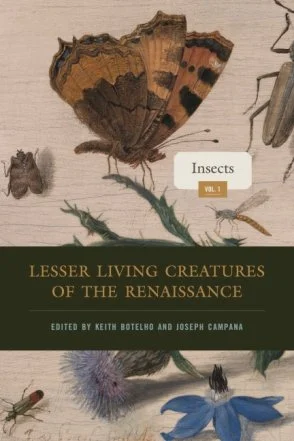
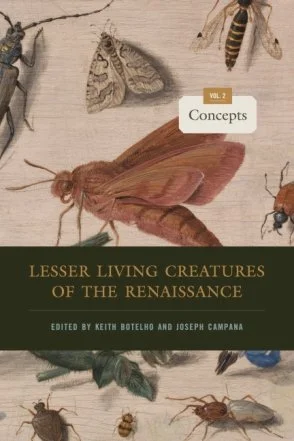
Lesser Living Creatures of the Renaissance: Insects andLesser Living Creatures of the Renaissance: Concepts of the Renaissance examines literary and cultural texts from early modern England in order to understand how people in that era thought about—and with—insect and arachnid life. Each addresses the collaborative, multigenerational research that produced early modern natural history and provides new insights into the old question of what it means to be human in a world of beasts large and small. Co-editing and co-writing (on bees) with Keith Botelho.
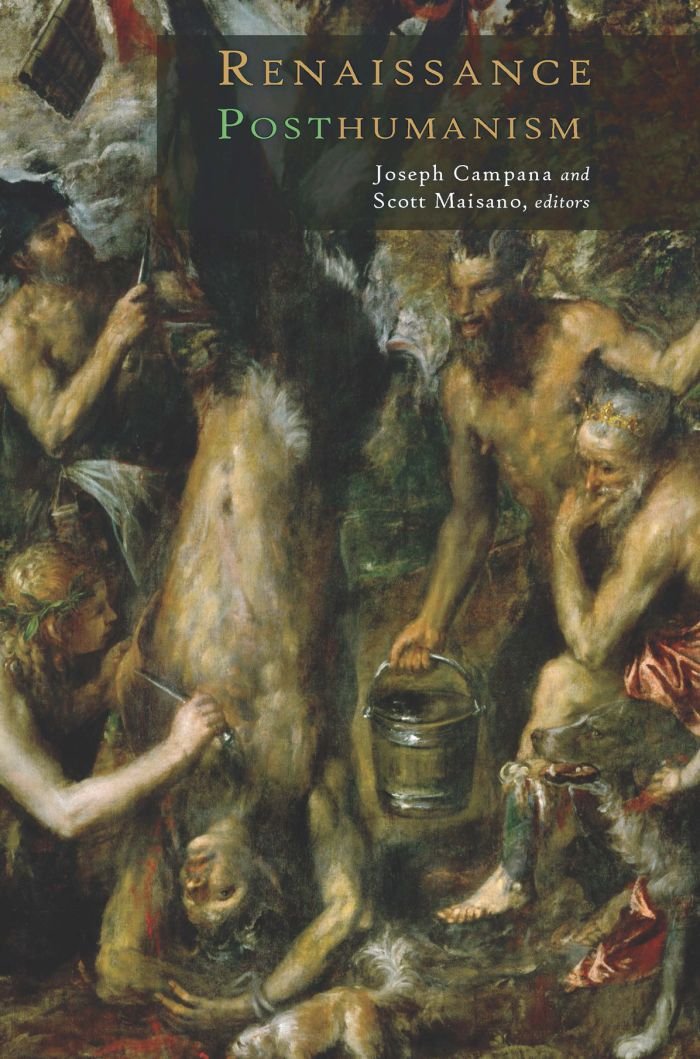
Connecting Renaissance humanism to the variety of “critical posthumanisms” in twenty-first-century literary and cultural theory, Renaissance Posthumanism(Fordham, 2016) reconsiders traditional languages of humanism and the human, not by nostalgically enshrining or triumphantly superseding humanisms past but rather by revisiting and interrogating them. What if today’s “critical posthumanisms,” even as they distance themselves from the iconic representations of the Renaissance, are in fact moving ever closer to ideas in works from the fourteenth to the seventeenth century? What if “the human” is at once embedded and embodied in, evolving with, and de-centered amid a weird tangle of animals, environments, and vital materiality? Seeking those patterns of thought and practice, contributors to this collection focus on moments wherein Renaissance humanism looks retrospectively like an uncanny “contemporary”—and ally—of twenty-first-century critical posthumanism. Edited with with Scott Maisano and co-written introduction.
monographs
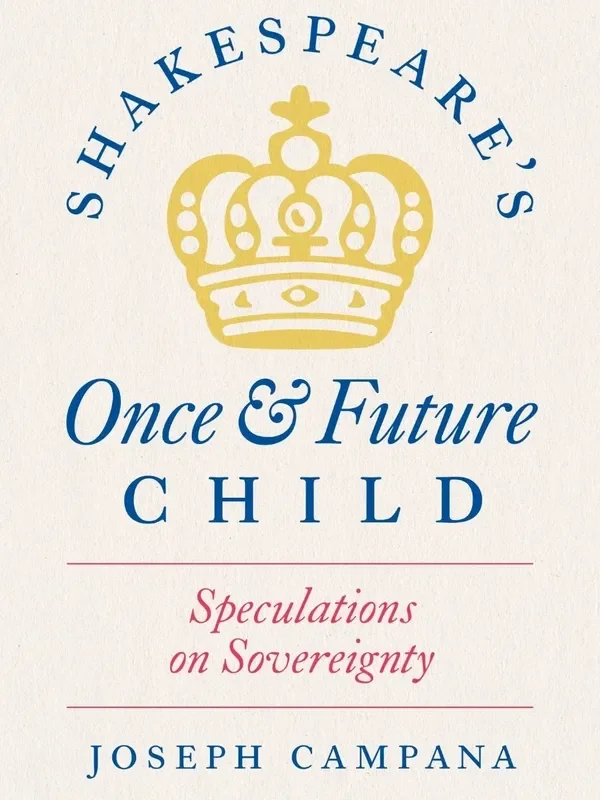
Politicians are fond of saying that “children are the future.” How did the child become a figure for our political hopes? Shakespeare's Once and Future Child locates the source of this idea in transformations of childhood and political sovereignty during the age of Shakespeare, changes spectacularly dramatized by the playwright himself.
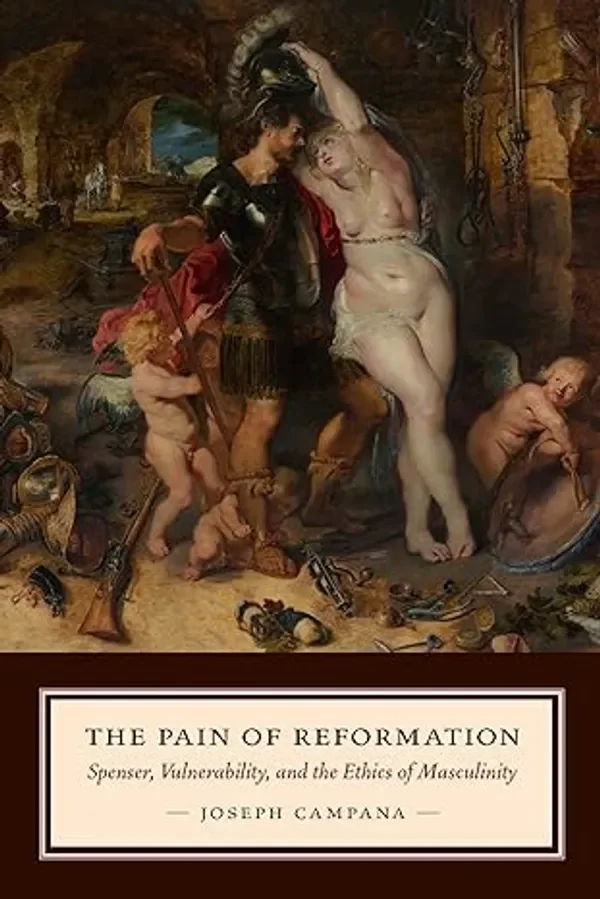
Spenser’s era grappled with England’s precarious political position in a world tense with religious strife and fundamentally transformed by the doctrinal and cultural sea changes of the Reformation. The Pain of Reformation argues that Edmund Spenser’s 1590 Faerie Queene represents an extended meditation on emerging notions of physical, social, and affective vulnerability in Renaissance England.
Selected Articles
"No Future(s) for Lyric? Of Sonnets and Speculation." In Lyric Temporalities, eds. Ryan Netzley and Kimberly Johnson, 127–148. Toronto: U Toronto Press, 2026.
"Herd, Swarm, Flock: Animal Populations in Early Modern England." In The Routledge Handbook of Shakespeare and Animals, edited by Holly Dugan and Karen Raber, 116–125. Routledge, 2020.
"Should (Bleeding) Trees Have Standing?" In Renaissance Personhood, edited by Kevin Curran, 87–116. Edinburgh: Edinburgh University Press, 2019.
"Shakespeare, as the Waters Rise." SEL: Studies in English Literature 1500–1900 59, no. 2 (2019): 415–428.
"Of Dance and Disarticulation: Juliet Dead and Alive." Shakespeare Survey 71 (2018): 164–174.
"Turn, Return, Revolve: John Donne's Kinetic Poetics." In John Donne and Contemporary Poetry, edited by Judith Herz, 197–216. New York: Palgrave Macmillan, 2017.
"Power Down." In Veer Ecology, edited by Jeffrey Jerome Cohen and Lowell Duckert, 60–75. Minneapolis: University of Minnesota Press, 2017.
Campana, Joseph, and Theodore Bale. "Picking, Pawning, Hoarding, and Storing: Archiving America on Reality TV." In The Oddball Archive, edited by Jonathan Eburne and Judith Roof, 8–45. Bloomington: Indiana University Press, 2016.
"Dancing Will: The Case of Romeo and Juliet." In Romeo and Juliet: A Critical Reader, edited by Julia Lupton, 153–176. London: Bloomsbury, 2016.
"Spenser's Inhumanity." Spenser Studies 30 (2015): 277–299.
"Distribution, Assemblage, Capacity: New Keywords for Masculinity?" European Review of History 22, no. 4 (2015): 691–697.
"The Child's Two Bodies: Shakespeare, Sovereignty, and the Ends of Succession." ELH 81, no. 3 (2014): 811–839.
"The Bee and the Sovereign? Political Entomology and the Problem of Scale." Shakespeare Studies 41 (2013): 94–113.
"Boy Toys and Liquid Joys: Pleasure and Power in the Bower of Bliss." Modern Philology 106, no. 3 (2009): 465–496. (Winner of the Crompton-Noll Award)
"On Not Defending Poetry: Spenser, Suffering, and the Energy of Affect." PMLA 120, no. 1 (2005): 33–48. (Winner of the Isabel MacCaffrey Essay Prize)